
When your pet suddenly gets sick or hurt, knowing where to go can save valuable time and reduce stress. Pet urgent care clinics and veterinary emergency rooms both provide same-day treatment, but they are designed for different levels of need. Urgent care handles problems that should be addressed quickly but are not life-threatening, such as minor wounds, mild vomiting, or ear infections. Emergency rooms are equipped for critical situations like severe trauma, trouble breathing, seizures, or suspected poisoning. The two also differ in hours, cost, wait times, and available equipment.
Understanding these differences helps you choose the right level of care, get your pet treated faster, and avoid unnecessary expenses when every minute counts.
What Does Urgent Care Treat?
Urgent care clinics bridge the gap between your regular veterinarian and a full emergency hospital. They are ideal when your primary vet cannot fit you in, but the situation is not severe enough to require intensive care. Common reasons for a visit include vomiting or diarrhea that has lasted a day or two, minor cuts and scrapes, torn nails, ear and eye infections, skin irritation, hot spots, coughing, sneezing, urinary issues, and mild limping. These clinics can typically perform exams, basic diagnostics like bloodwork and X-rays, and treatments such as fluids, wound care, and prescription medications. For many everyday health scares, pet urgent care provides fast, effective treatment in a calmer and more affordable setting.
What Does the Emergency Room Treat?
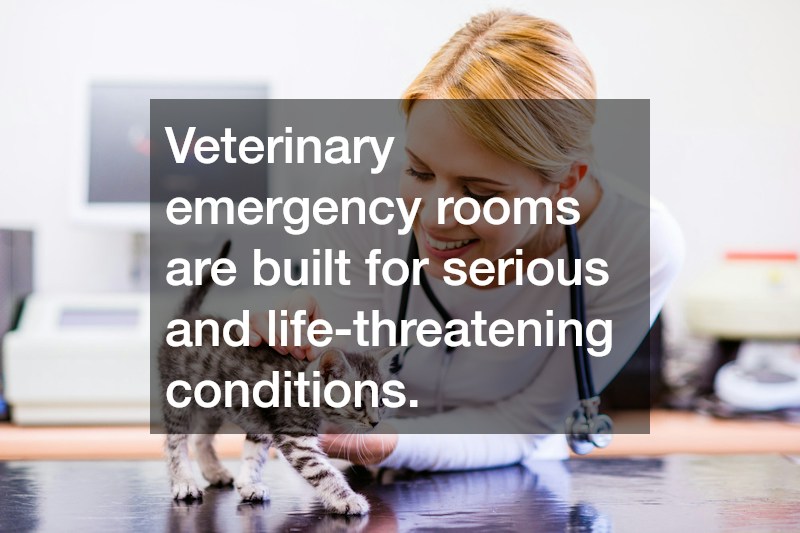
Veterinary emergency rooms are built for serious and life-threatening conditions. They usually have advanced diagnostic equipment, surgical suites, intensive care units, and staff trained to stabilize critically ill or injured animals. Pets should go directly to the ER for difficulty breathing, collapse, seizures, heavy bleeding, major trauma such as being hit by a car, a swollen or bloated abdomen, suspected poisoning, inability to urinate, severe allergic reactions, or signs of extreme pain. Difficult births and heatstroke also require emergency attention. Many ERs offer overnight hospitalization and continuous monitoring, which urgent care clinics generally cannot provide. When a pet’s life may be at risk, the emergency room is the right choice.
Differences in Hours and Availability
One of the most practical differences between these options is when they are open. Most urgent care clinics offer extended hours, including evenings and weekends, which makes them convenient when your regular vet is closed. However, many are not open overnight. Emergency hospitals, on the other hand, are often available 24 hours a day, seven days a week, including holidays. This around-the-clock availability is essential for true emergencies that happen late at night. Before a problem arises, it is a good idea to look up the nearest urgent care clinic and emergency hospital, note their hours, and save their contact information. Having this plan in place prevents panic during a stressful moment.
How Do Costs and Wait Times Compare?
Cost is often a major consideration for pet owners. Emergency rooms typically charge higher fees because they maintain specialized equipment, staff experienced in critical care, and operate at all hours. Urgent care visits are generally less expensive for comparable non-critical issues, making them a more budget-friendly option when the situation allows. Wait times also differ. Both types of facilities use triage, meaning patients are seen based on medical need rather than arrival order. At an ER, a pet with a minor problem may wait a long time while critical cases are treated first. At urgent care, where cases tend to be less severe, wait times are often shorter, allowing your pet to be seen and treated more quickly.
How to Decide Where to Go
Choosing between urgent care and the ER comes down to the severity of your pet’s symptoms. Ask yourself whether your pet is breathing normally, alert and responsive, able to stand and walk, and free from heavy bleeding. If the answer to any of these is no, go to the emergency room right away. If your pet is uncomfortable but stable, urgent care is often the better fit. Trust your instincts, since you know your pet’s normal behavior better than anyone. When in doubt, call ahead. Staff at either facility can listen to your description and help you determine the most appropriate place for your pet to be seen.
What If Urgent Care Is Not Enough?
Sometimes a condition turns out to be more serious than it first appeared. If an urgent care veterinarian determines your pet needs surgery, intensive monitoring, or advanced diagnostics that the clinic cannot provide, they will stabilize your pet and recommend transfer to an emergency hospital. Many clinics will call ahead to the ER and send records so the next team is prepared. While this may mean an additional stop, starting at urgent care is not wasted time. The initial assessment and stabilization can be valuable, and it ensures your pet receives the appropriate level of care as quickly as possible.
The Role of Your Primary Veterinarian
Neither urgent care nor the ER is meant to replace your regular veterinarian. Your primary vet knows your pet’s history and handles preventive care, chronic conditions, and routine follow-ups. After an urgent or emergency visit, records are usually shared with your regular vet so they can monitor recovery and adjust ongoing care as needed. Keeping your pet’s vaccinations, medications, and medical records organized makes these transitions smoother. It is also helpful to ask your primary veterinarian which local urgent care and emergency facilities they recommend, so you have trusted options ready when needed.
Choosing the Right Care With Confidence
Knowing the difference between urgent care and the emergency room helps you make fast, informed decisions when your pet needs help. Urgent care is ideal for non-life-threatening issues that require same-day attention, while the ER is the right choice for critical injuries and severe symptoms. Considering hours, costs, wait times, and the seriousness of your pet’s condition can guide your decision. By planning ahead and knowing your local options, you can feel prepared when the unexpected happens. For everyday health scares, pet urgent care offers a convenient and affordable way to get your companion the timely treatment they deserve.